


Box Escape: Survival Launcher
4.329.00 Reviews
App Specs
- Version
- 1.0.8
- Updated On
- License
- Free
- Downloads
- 1,000,000+
- Developer
- torsopolecats
- Categories
- Role Playing
- Platform
- Android
Screenshots
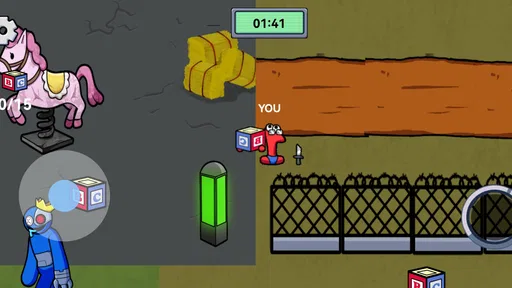
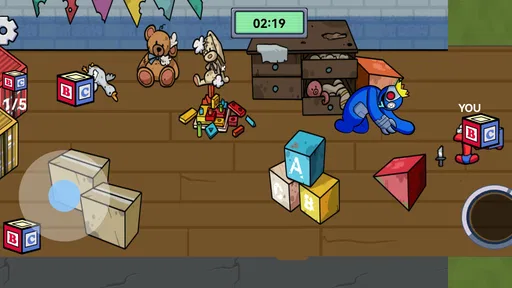
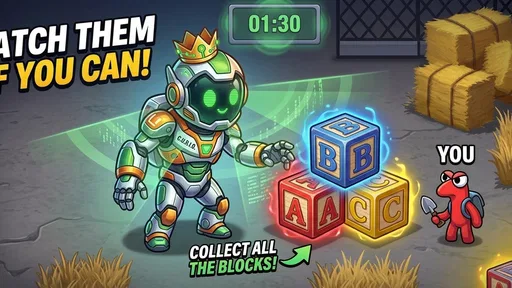
 Analysis by AppCompare
I would approach Box Escape: Survival Launcher as a small, focused game for the moments when I want to solve something rather than settle into a long adventure. Its central challenge is about moving boxes while monsters create pressure, so each decision has a practical consequence: a placement can help protect a route or make the next escape harder. That gives the game a clear identity, but it also means the chase is part of the appeal, not background decoration.
A quick check before you install
The game is free to download and is rated for Everyone. It was released on April 13, 2026, and its current version is 1.0.8. It supports Android 8.0 and later, which gives Android users a simple compatibility point to check. The developer is torsopolecats. Its average rating is 4.3 from around 1,700 ratings, with over one million installs; those figures show that it has found an audience, though they cannot tell you whether you personally enjoy solving puzzles under pursuit.
Free entry makes it easy to test the basic idea, but it does not answer every spending question. I would not assume that there are no ads or optional purchases, nor would I claim that paying is needed to progress or gain an advantage. Those points are not established here. If you prefer to know every detail of a game’s purchase model before trying it, check the current platform page and in-game prompts rather than treating the download price as a complete account of spending.
That distinction is useful because the game’s main promise is about play, not a purchase system: plan box placement, keep a route open, and respond to danger. I would start with the free download only if that loop sounds appealing on its own. The fact that it costs nothing to begin is a low-risk invitation, not evidence about what later play may or may not offer.
A compact premise with a clear point
The game’s central task makes its identity easy to understand. Boxes are part of the puzzle, monsters create urgency, and your route through the space matters. That combination can make even a straightforward action feel satisfying: a box moved too early may block a path, while waiting too long may leave you with fewer safe options. The strongest reason to try it is this mix of planning and reaction, rather than a promise of a large role-playing world.
That distinction matters when choosing what to download. Despite its role-playing category, Box Escape: Survival Launcher is best approached as a compact survival-and-puzzle challenge. Players looking for a story-heavy adventure, character builds, or long conversations may find the premise too focused. If you want a game where the next decision is about positioning, timing, and avoiding a threat, its core idea is much more relevant.
Who is likely to enjoy it?
I would point it toward players who like thinking ahead but do not want a complicated ruleset before they can begin. The box-moving objective offers a natural problem to solve, while the monster threat gives that problem a sharper edge. It also suits someone who wants a game they can pick up between other tasks, rather than one that asks for a long, uninterrupted session.
Worth Reading Before You Choose

Flipboard Shows What News Apps Must Do Beyond the Feed

Switching to Android Auto Means Rethinking Your Driving Routine

Google Calendar Makes a Crowded Week Easier to Manage

Ludo King Makes the Most of the Minutes Between Plans

Baby Panda World Brings Quick Play to Modern Phones, but Its Game Library Feels Busy

ESPN’s Live Game View Makes Following Close Games Easier
For example, if I had a few minutes while waiting for a ride, I could use that time to focus on one escape challenge: check where a box can go, avoid closing off a route, and react when the danger changes the plan. That is a more useful way to think about the game than expecting a deep role-playing campaign. It may work well for casual sessions, though anyone who dislikes time pressure should consider whether the monster-chase element sounds enjoyable rather than stressful.
It is also a reasonable candidate for a short break at home when I want a little concentration without committing to a story I will need to remember later. The trade-off is that a short session still asks for attention: if I start moving boxes while distracted, I may create a problem for myself rather than unwind. I would choose it over a narrative game when I have only a brief window, but not when I want to play with half my attention on something else.
How I would approach the box puzzles
A practical habit for this kind of game is to look at the space before moving the first box. I would identify narrow passages, possible dead ends, and the direction I might need to escape from before committing to a push. A box can help create safety, but it can also become an obstacle if it is placed without considering the return route. That small pause is likely to be more valuable than rushing at the first available move.
When a monster is part of the pressure, it is tempting to treat every second as a reason to move faster. I would instead separate the problem into two questions: what placement improves my safety, and what movement preserves a way out? That approach keeps the puzzle legible even when the chase makes it feel urgent. It is a concrete trade-off at the heart of the concept: a cautious move may preserve options, while a quick one may buy immediate breathing room but leave fewer choices afterward.
One useful way to keep a plan flexible is to think of the box as a commitment, not merely an object to move toward a goal. Before pushing, I would ask whether I can still pass the box afterward and whether the space it occupies might be needed as an escape lane. This simple check helps distinguish a move that solves the immediate problem from one that leaves the whole route workable.
Pressure, progress, and the limits of the premise
I’d use this section to judge the game by the choices its central loop asks me to make, rather than by expecting a broad campaign or elaborate character growth. A useful test is whether I can learn from a risky box placement and adjust my next attempt, because that makes pressure feel like part of the puzzle instead of noise. That distinction also helps clarify which players will find the challenge fair and satisfying.
Why the chase changes the puzzle
Ordinary box-pushing puzzles reward careful planning, but a pursuing enemy changes the mood. The player has to weigh a good long-term arrangement against the need to act now. That tension is the game’s most promising hook: a placement is not only correct or incorrect, but useful or risky in the current situation. If the game’s challenge is what you want, the pursuit can make familiar spatial thinking feel more immediate.
There is a possible downside to the same design. A player who wants to inspect every option at their own pace may find the threat frustrating, particularly if a mistake makes the route harder to recover. I would not recommend it as a relaxing alternative to a slow, untimed logic game. It is a better fit when you enjoy having to make a decision before you feel completely certain.
Another helpful way to play is to treat a failed attempt as information. Rather than repeating the same sequence, ask which move closed off the escape path or made the box less useful. That is a small but meaningful shift: the puzzle becomes a process of testing a route, noticing the consequence, and adjusting the next plan. It also helps keep the pressure from turning into random trial and error.
For a realistic everyday session, I would give myself a simple goal: solve one situation carefully, then stop if I notice that I am rushing without reading the space. That keeps a quick break from turning into a string of frustrated attempts. If I have time to focus, I can experiment with a different route; if I am already tired, a calmer puzzle is likely to be the better choice.
Progress without assuming a long campaign
The available premise points to a focused loop of moving boxes and avoiding monsters. I would judge progress by whether the challenges keep asking me to reconsider positioning, not by expecting the usual role-playing markers such as equipment upgrades or an elaborate character journey. Players who enjoy mastering a compact mechanic may find that focus refreshing. Players who need a broad sense of progression may prefer a more traditional adventure RPG.
It is also worth being realistic about replay appeal. A puzzle game can stay interesting when the player has to discover new solutions or improve their decisions, but that depends on how the challenges are presented. The basic concept gives the developer room to create meaningful variations through layout and pressure; it does not, by itself, guarantee a large amount of content. I would try it for the immediate puzzle-and-escape loop, not on the assumption that it will serve as a long-term role-playing home.
That is the main question I would keep in mind after the first few sessions: does figuring out a safer, cleaner route feel rewarding enough by itself? If yes, the compact focus can be a strength, since I can return for the puzzle rather than for a complicated set of systems. If I need a growing collection of character goals or a clear narrative payoff to stay interested, the premise may feel narrow even if the individual decisions are engaging.
Where it sits beside other role-playing games
Compared with the usual role-playing alternatives, this game puts the physical puzzle first. Many RPGs ask players to develop a character, follow a narrative, or manage a team. Here, the recognizable draw is a more direct problem: boxes, danger, and finding a safe way through. That makes it easier to approach casually, but it also means it is not a substitute for an RPG whose appeal comes from story choices, exploration, or detailed progression.
Compared with a conventional box puzzle, the monster threat is the feature that gives the idea its distinct flavor. A purely untimed puzzle is usually better for methodical players who want to solve at their own speed; this one is the more natural choice for someone who wants planning to happen under pressure. My recommendation depends on that preference. If you enjoy suspense attached to spatial reasoning, the combination is worth a look. If urgency makes puzzle-solving feel less fair to you, a calmer alternative is likely to be a better match.
So I would choose between it and other games by the kind of attention I want to spend. For a quiet, methodical session, an untimed logic puzzle is the safer pick. For a story-led evening, a conventional RPG offers more of the character and narrative structure this game does not foreground. This one occupies the narrower middle ground: it asks for puzzle thinking, but makes the situation feel urgent enough that planning and reaction have to share the same moment.
Fairness, spending, and what is established
The game is free, so there is no purchase price required to start. That is useful for deciding whether to give its unusual premise a try. I would not use the free label alone to make claims about optional purchases, ads, or whether spending affects play; those details are not established here. In particular, I cannot responsibly tell you that paying is necessary, that it offers an advantage, or that the game is free of purchases.
For competitive fairness, the same caution applies. The central challenge described is a solo-style escape problem, not a contest with other players, so I would not evaluate it as a competitive ranking game. No multiplayer or paid advantage is established. If fair play is your main concern, the practical takeaway is simply to assess it as a puzzle-and-survival experience and avoid assuming that its free entry price answers every question about monetization.
For someone deciding whether it is suitable for a shared device or a younger player, the Everyone rating is a useful starting point, but the more personal issue is temperament. I would pay attention to whether being chased makes the puzzle exciting or unpleasant. A broadly accessible content rating does not mean every player will enjoy the same level of urgency, so a brief supervised trial can be more informative than relying on the label alone.
Trust and practical fit
The game is free to download, is rated for Everyone, and comes from torsopolecats. It was released on April 13, 2026, and version 1.0.8 is the current version. Its average rating is 4.3 from around 1,700 ratings, and it has over one million installs. Those figures suggest that many players have tried it, but they do not tell me whether its pressure level, puzzle style, or progression will suit you personally.
It supports Android 8.0 and later, which makes the minimum system requirement straightforward for many Android users to check before installing. If you are choosing a game for a younger player, the Everyone age rating is relevant; I would still consider whether that player enjoys being chased and making quick decisions. A content rating is not the same thing as a promise that every player will find the experience calm or comfortable.
A few practical questions remain worth checking on the current platform page: whether the purchase model includes optional spending, what the latest version presents in its own description, and whether the experience suits the device you plan to use. I would not infer answers from the download price or from the game’s puzzle premise. That is a more reliable way to make a decision than filling in unknowns with assumptions.
The most useful question before downloading is not whether the game sounds like a full-scale RPG, but whether its central tension sounds fun to you. If you like spotting a route, placing a box with care, then adapting when a monster puts that plan under pressure, this is a focused option to try. If you want relaxed puzzle-solving, extensive character development, or a clearly established competitive economy, I would choose something else.
My verdict is cautiously positive for the right player. The box-and-monster premise gives the game a specific identity, and its free entry point makes it easy to test whether that blend of planning and urgency clicks. I would go in expecting a compact survival puzzle rather than a sprawling role-playing adventure, and I would pay attention to how much the chase adds to the challenge for me. If it makes each move feel purposeful rather than merely stressful, Box Escape: Survival Launcher is an easy game to recommend for a quick, focused session.
Pros
- Quick rounds make it easy to play in short sessions.
- Simple controls are easy to understand from the start.
- Survival-focused gameplay gives each run a clear goal.
- Launcher mechanics add variety to the usual escape format.
- A lightweight premise makes it approachable for casual players.
Cons
- Repeated runs may start to feel similar over time.
- Timing-based challenges can be frustrating for some players.
- Progress may depend heavily on learning through trial and error.
- The survival theme may not appeal to players seeking a story.
- Its focused gameplay offers limited variety between sessions.
FAQs for Box Escape: Survival Launcher
What is Box Escape: Survival Launcher?
Box Escape: Survival Launcher is an action game centered on escaping dangerous situations while surviving against threats. Its launcher-style gameplay is designed around aiming and firing to move through encounters, rather than simply running through a level. The exact mechanics, objectives, and available modes can vary by version, so check the current store listing and in-game tutorial to see what is included before downloading.
How do you play Box Escape: Survival Launcher?
Gameplay generally involves using launcher controls to target obstacles or enemies and create a path toward safety. You will need to judge when and where to fire, since poorly timed shots may leave you exposed or slow your progress. If the game offers a tutorial, it is worth completing it first; control sensitivity and level goals may take a little practice to understand.
Is Box Escape: Survival Launcher free to download, and does it include ads or in-app purchases?
The price and monetization details depend on the version and platform available in your region. A game may be free to install but still include advertisements, optional purchases, or paid content. Check the Google Play or App Store listing for the latest information, including in-app purchase disclosures, before downloading. If ads or purchases are present, review the settings and avoid confirming transactions unintentionally.
Can I play Box Escape: Survival Launcher offline?
Offline availability is not guaranteed and can depend on how the current version handles levels, advertisements, account features, and updates. Some games allow core stages to run without an internet connection but require connectivity for other features. To avoid surprises, check the store description and try launching the game while offline after installation. An internet connection may still be needed for the initial download or updates.
Is Box Escape: Survival Launcher suitable for children, and what should I check before installing it?
Suitability depends on the game’s content, difficulty, advertising, and the age rating assigned in your region. Review the current store rating and description for information about violence, user interaction, and purchases. Parents may also want to check whether ads or external links appear and enable device-level purchase controls. Make sure your phone meets the listed requirements and has enough storage for the installation and updates.


